SEO for Plumbers, Electricians and Contractors: How It Works
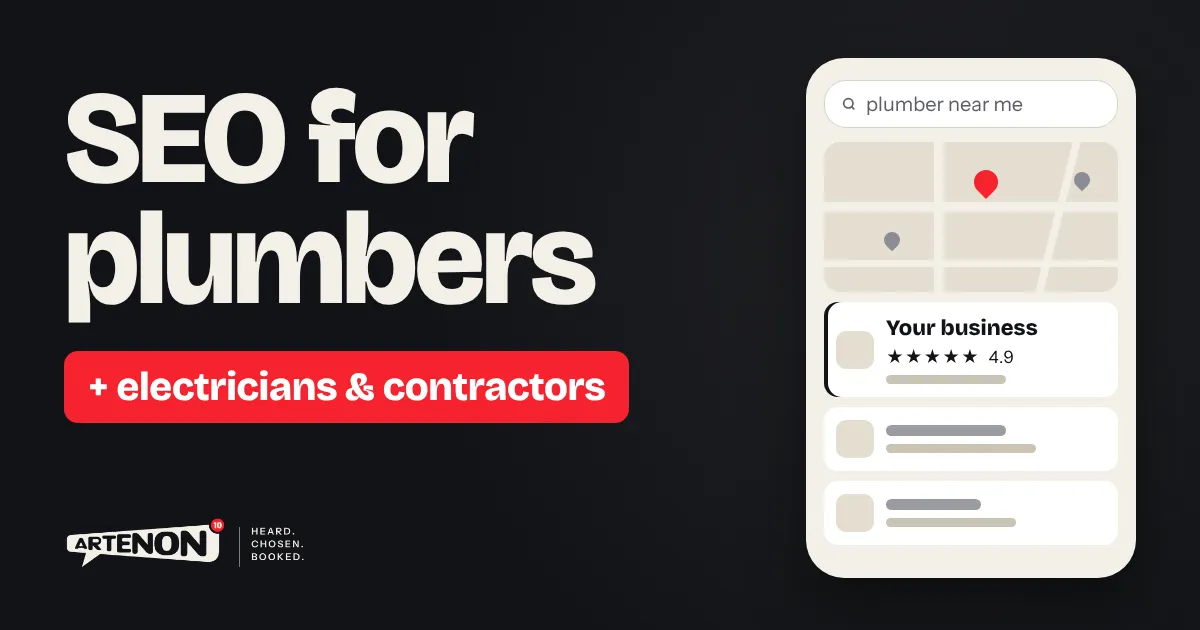
SEO for plumbers, electricians and contractors is the work of making sure your business shows up when someone nearby searches for the service you offer: on the Google map, in the search results below it, and in AI answers from tools like ChatGPT. It matters because that's where more and more of your next customers start looking, and most of them never look past the first few names they see.
This guide explains how it works, what it can do for a trade business, and what it quietly costs you when it's missing.
How do people find a plumber or electrician today?
Word of mouth still counts, but the path has changed. In a fall 2025 survey of 422 US homeowners who hired home services that year, Google Search and Maps was the most common place to start looking (39%), well ahead of contractor websites (17%) and social media (11%) [1]. Among millennial homeowners, 62% started on Google [1]. Those are the customers who'll be calling contractors for the next few decades.
Even referrals end up on Google. A neighbor says "call Mike's Plumbing," and the first thing most people do is search the name to check the reviews and find the number. If what they find is thin, outdated or missing, that referral can quietly go to someone else.
What is SEO, exactly?
Search engines want to send people to the business most likely to solve their problem. SEO (search engine optimization) is the work of giving Google, and now AI tools, enough clear and trustworthy information about your business to choose you. (New to the term? Start with our beginner's guide: What is SEO, how does it work, and why is it important for your business?)
For a trade business, it covers three places a customer can find you:
The map. The three business listings with star ratings that appear for searches like "plumber near me." These come from Google Business Profiles.
The search results. The website links below the map, where people compare options and research bigger jobs.
AI answers. Google's AI Overviews and assistants like ChatGPT, which now recommend businesses by name.
How does Google decide who shows up first?
Google says its map results are based mainly on three things [2]:
Relevance: how well your business matches what the person searched for.
Distance: how close you are to the searcher, or to the area they typed in.
Prominence: how well known and trusted your business is, judged from things like your reviews, your website and mentions of your business across the web.
Distance is mostly fixed. Relevance and prominence are built over time, and that's what SEO works on. It's also why a newer shop with a strong online reputation can show up ahead of one that has been around for 30 years but barely exists online.
What can SEO do for a plumbing, electrical or HVAC business?
When it's working, it helps at every step between a stranger's search and a booked job.
Getting found at the moment of need. A burst pipe or a dead panel doesn't wait. Those calls go to whoever shows up first and looks trustworthy, and SEO is how you get into that short list.
Winning the bigger jobs. Repipes, panel upgrades and new HVAC systems are researched for days. Homeowners read about the work, look at photos and compare businesses before they call. The company that keeps showing up during that research is the one they trust with the big-ticket job.
Being chosen, not just seen. In a 2024 survey of 400 homeowners, 91% said online reviews are an important factor when picking a contractor, and Google was the most common place they'd look for them (56%) [3]. Search is where that reputation gets seen.
Owning your leads. Shared-lead sites often send the same homeowner to several contractors at once. When a customer finds you by searching, they're calling you, not working through a list.
Building something that compounds. Ads stop the day the budget stops. The reputation and visibility a business builds in search keep working for it, as long as they're kept up.
What does it cost a trade business to be hard to find online?
This is the part most owners never see, because the calls you miss don't show up anywhere. Nobody leaves a voicemail saying they found someone else first.
Homeowners in the 2025 survey contacted about two contractors on average before choosing one [1]. So the short list is made before anyone picks up the phone. If you're not on it, you're not in the running, however good your work is.
Try it with your own numbers: think about how many calls a week might be going to someone else, how often you'd normally win the job, and what an average job is worth to you. Even one missed water heater replacement or panel upgrade a week adds up over a year. And those customers don't disappear. They become someone else's repeat customers and someone else's five-star reviews.
The gap also tends to grow. Every week a competitor collects reviews and keeps their profile active, they get a little harder to catch.
Why are AI answers making this more urgent?
Homeowners have started asking AI assistants directly: "Who's a good electrician near me?" or "Should I repair or replace my water heater?" Google says the Gemini features in Maps are grounded in its data about 250 million places and insights from the Maps community [4].
These tools build their answers from what already exists online about a business: its website, its listings and its reviews. When there isn't much there, there isn't much for them to recommend, and the answer names someone else.
Why does SEO take ongoing work?
It isn't a one-time setup. Google makes broad changes to how it ranks results several times a year [5]. Competitors keep adding reviews and pages. Your services, hours and service area change. New reviews need replies. Your business details on dozens of directory sites drift out of date. AI tools keep shifting where they pull their information from.
Staying visible means keeping an eye on all of it, month after month, and fixing what slips. That's why it so often falls to the bottom of the list for owners who are on job sites all day, and why the businesses that show up consistently usually have someone whose job it is.
How long does SEO take to work?
Usually months, not days. It depends on how many competitors are in your area, how established they are online, and where your business is starting from. Anyone who promises a specific ranking or a set number of leads by a date is promising something nobody controls. What you can count on is that the work builds on itself, and that waiting doesn't make it easier.
At Artenon, we help plumbers, electricians and other trade businesses show up when homeowners search: on Google, on the map and in AI answers. Curious how your business shows up today? Schedule your free Custom Digital Presence Review.
Frequently asked questions
Is SEO worth it for a small trade business?
Your customers are already searching for what you do. The real question is whether they find you or the shop down the street. For most trade businesses, being part of that search is where a big share of new work begins.
I get most of my work from referrals. Do I still need SEO?
Referrals get checked online. When someone looks up your name and finds strong reviews and clear information, the referral turns into a call. When they find little or nothing, it often doesn't.
What's the difference between SEO and Google Local Services Ads?
Local Services Ads are paid listings at the very top of the page, where you pay per lead. SEO is how you earn a spot in the map and the regular results without paying for each click. Many contractors use both: ads for calls now, SEO for the long run.
Is having a website the same as doing SEO?
No. A website is one piece. Google also weighs your Business Profile, your reviews and how your business appears across the web. A good-looking site that Google doesn't understand or trust won't show up on its own.
Sources
Mantel, "Homeowner Shopping Attitudes Report 2025" (422 US homeowners who hired home services in 2025, surveyed fall 2025)
Google Business Profile Help, "Tips to improve your local ranking on Google"
ACHR News with Clear Seas Research, "91% of Homeowners Rely on Online Reviews Before Picking Contractor" (400 homeowners, Sept 17, 2024)
Google, "New in Maps: Inspiration curated with Gemini, enhanced navigation and more"
Google Search Central, "Google Search's Core Updates"


